2 day live bootcamp ·
The Writing Therapy Bootcamp for Practitioners
Add a timeless skill to your sessions. A structured writing technique you can use with a client the same week.
Live on Zoom · recordings of both days included
Day 1 money-back guarantee: attend Day 1, and if it is not a fit for your caseload, email me the same evening and I will return the full fee. No questions, no forms.
"I had a great experience in exploring writing therapy, very crisp and clear format, and you made it quite simple to understand, feels like a great therapeutic tool for myself and for my clients. Looking forward to some more in depth workshops where we can learn more techniques, more structure and more prompts on how to go further deeper with the clients who are ready to dive in deeper."
What is included
How it works
Six steps, start to finish
Reserve your seat
Two minutes, secure payment, confirmation on email and WhatsApp.
Pre-session reading
Sent before Day 1, so live time is practice, not lecture.
Day 1 live
The technique itself, and how to hold the room while it happens.
Day 2 live
Applying it to real presentations, and knowing where it stops.
Use it with a client
Inside a normal 50 minute hour, from the week after.
Supervision and support
Bring your first cases back and keep asking after it ends.
Voices from the work
What people say afterwards
"From the start he made it very clear that he was not there to judge me in any shape or form. For me it felt like a very safe space to be open and to write from my heart. The workshop enabled me to become more self aware, and alter my perspective in relation to a couple of aspects of my life."
What it is
What you actually learn
01
One short writing task
You hand your client a prompt and set a timer. They write, right there in the session.
02
The quiet client starts talking
Writing it down first makes it easier to say out loud. The silence you keep hitting opens up.
03
You know what to look for
You learn exactly what to notice in what they wrote, and what to leave alone.
04
They leave with a next step
Your client goes home with a follow-up prompt, and you pick it up together next week.
For your practice
What you get out of it
Clients notice the difference
Anyone can say "try journalling." You hand over a prompt built for exactly what they are carrying. That is what gets you remembered, and referred.
You always have a next move
When a client goes quiet or repeats the same story, you are no longer waiting it out. You know what to do next.
No more prompts on the spot
A library sorted by the problems you actually see. You open the right one instead of inventing it in the room.
Why it works
Why writing works when talking stalls
Naming it shrinks it
Once a feeling is written in plain words, your client can look at it instead of drowning in it. That shift is where sessions start moving.
Story beats venting
Repeating the same pain out loud goes nowhere. Writing it in order, with your guidance, is what turns it into something they can use.
The page is not a face
Clients hide the thing that most needs air. Writing it down feels safer than saying it, so it finally comes out.
Writing slows the spiral
A pen moves slower than a racing mind. Overthinking loses its speed on paper, without you confronting anything.
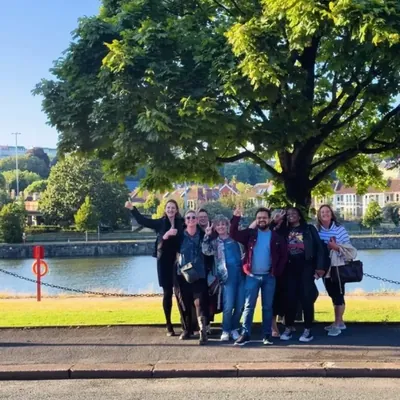
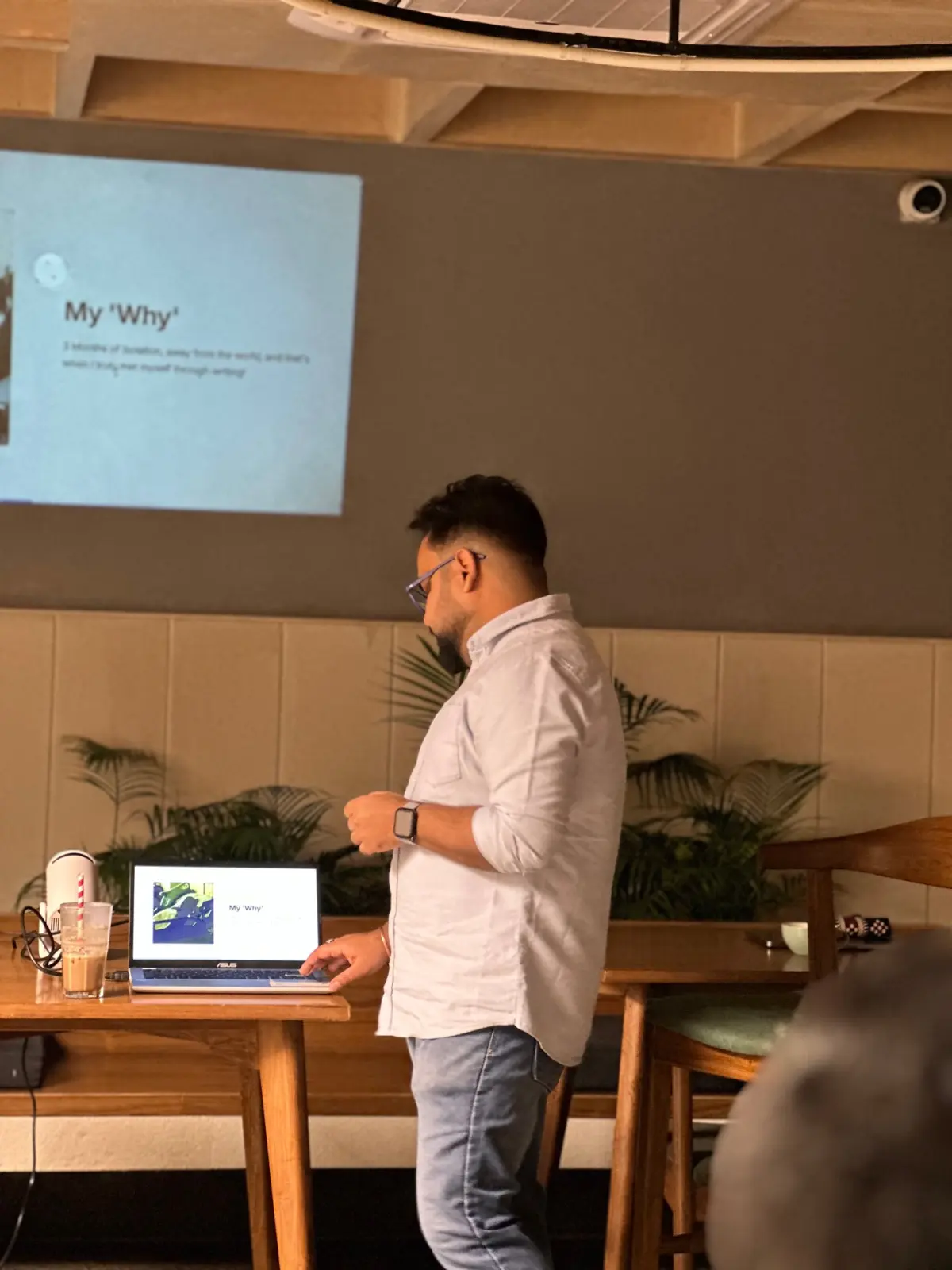
Rooms already taught, across South and South East Asia, the UK and the Middle East.

How it helps
Six clients you already have
The client stuck in a loop
Same story, same words, every week. A tight prompt forces new words, and the loop cracks.
The client who goes quiet
Eight minutes of writing gets past the guard that keeps saying "I'm fine."
Fresh grief
Staged prompts let them walk up to the loss slowly, instead of all at once.
Big life changes
Divorce, a move, a diagnosis. Writing helps them make sense of who they are now.
The client who cannot decide
The decision goes on paper, out of their head. They can finally see it instead of circling it.
The week between sessions
You hand them a prompt matched to what they brought today, and they keep moving without you.
Where it stops
- Active crisis, acute suicidality or ongoing risk. The page is not a holding environment, and Day 2 covers exactly how to make that call.
- Unprocessed trauma with no stabilisation in place. You learn the sequencing rules that keep writing from becoming re-exposure.
- Clients in dissociative states, where the instruction to go inward is the wrong instruction.
- This sits alongside your practice. It does not replace your modality, and it is not a psychotherapy licence.
Read it before you decide
Take the primer home first
Who this is for
This is for you if:
- You are a therapist, counsellor, coach, wellness practitioner or psychology student
- You want a structured technique for the moments talk alone does not move: rumination, the client who goes quiet, the story on repeat
- You want something concrete to hand a client between sessions, not vague advice to try journalling
- You want to know where a technique stops, not just where it works
This is not for you if:
- You are looking for a psychotherapy licence or a new primary modality
- You want a technique you will never actually try with anyone
- You work primarily with acute or crisis caseloads
- You want a survey of many approaches rather than one technique taught in depth
The two days
Day 1 and Day 2
We start with the evidence base: James Pennebaker’s research on expressive writing, and the narrative therapy tradition of Michael White and David Epston. Then you do the work yourself, in guided live writing exercises with the group, so you feel the technique from the inside before you ever offer it to a client.
- James Pennebaker’s expressive writing paradigm: when writing shifts a memory
- Michael White and David Epston: externalising conversations and the narrative lens
- Live writing exercises with fellow practitioners, not just theory
- The four-part structure you can take straight into a session
90 minutes live · 30 minutes Q&A
Day two is where you apply the technique to what actually walks into your room: rumination, grief, decision fatigue, identity work. You will do more live writing in breakout-style work with peers, then look at contraindications, sequencing with trauma, and when to hand something back to talk work or refer on.
- Matching prompt to presentation, with live examples
- Reading the writing for clinical signal
- Live practice with peers on real practitioner cases
- Contraindications, trauma sequencing, and the scope of practice
- Prompts for rumination, grief, decision fatigue, and identity work
- What to do when the writing surfaces more than the client expected
90 minutes live · 30 minutes Q&A
Who is teaching this
Harshit Bhatia

Writing therapy facilitator, narrative practitioner and speaker.
Harshit holds an MSc in Creative Writing for Therapeutic Purposes from Middlesex University with the Metanoia Institute, and studied Introduction to Counselling at the University of Oxford. He has presented his work at Lapidus International in London, the UK body for writing for wellbeing.
He has guided 500+ practitioners and clients through this work across South and South East Asia, the UK and the Middle East: in one to one rooms, in therapist trainings, in schools and inside organisations. This bootcamp is the same structure, taught to you directly.
500+
Participants taught so far
MSc
Writing for Therapeutic Purposes, Middlesex with Metanoia
Oxford
Introduction to Counselling
Lapidus
Presented at Lapidus International, London
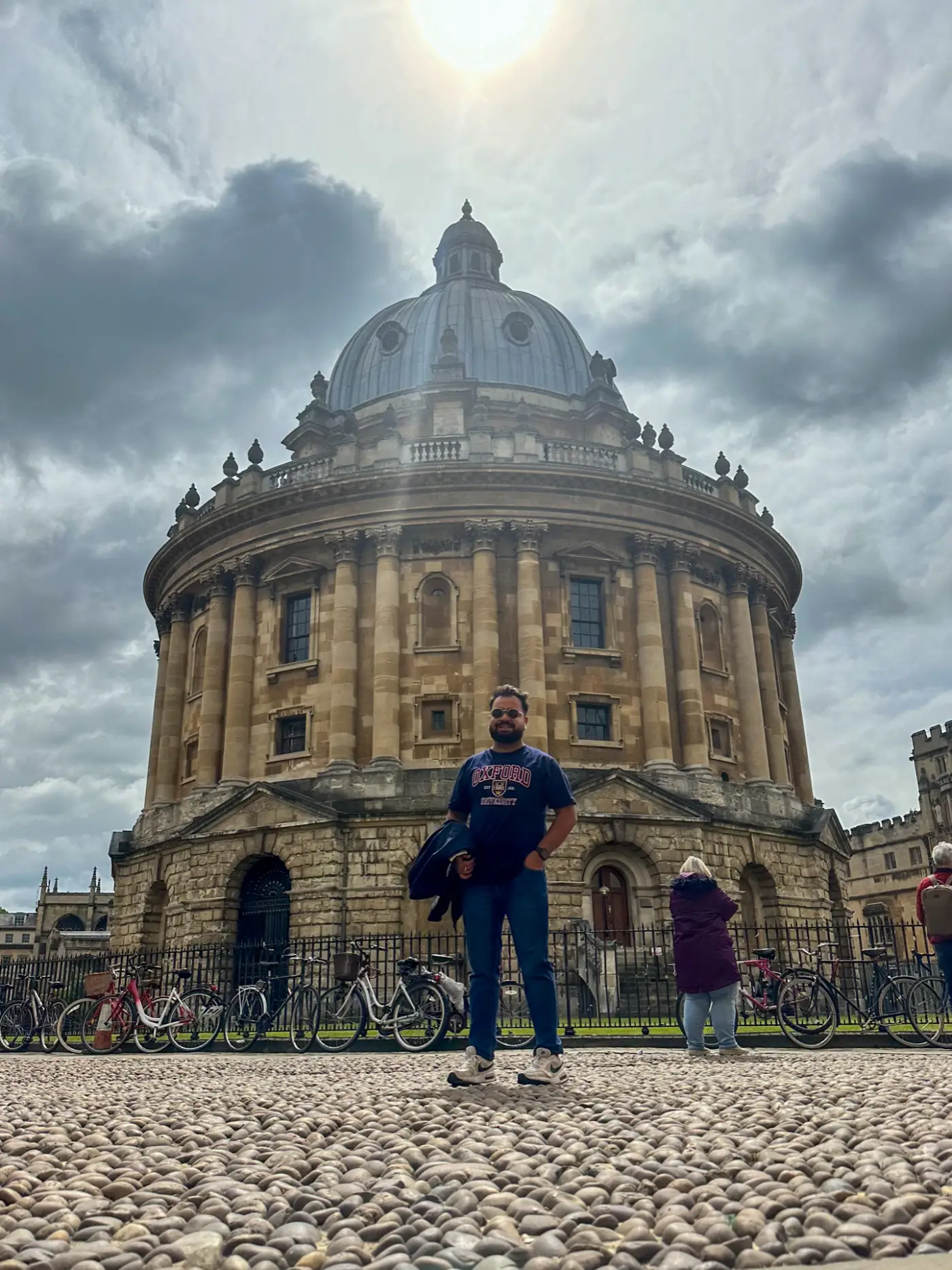
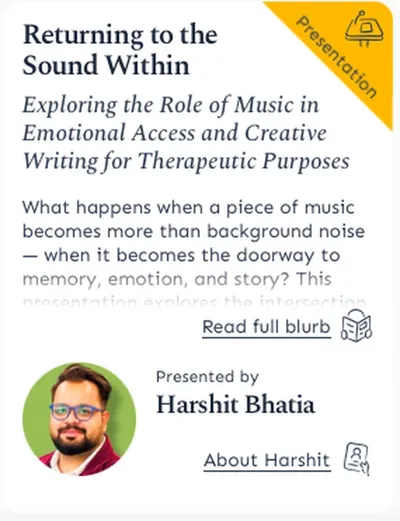
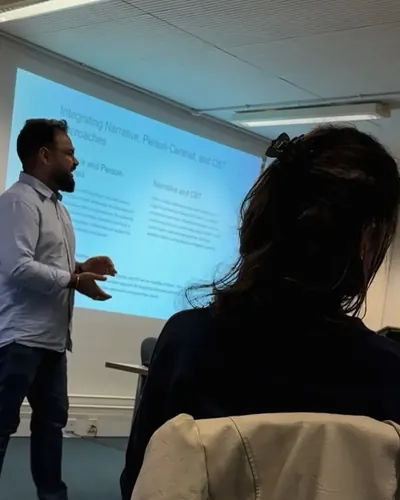
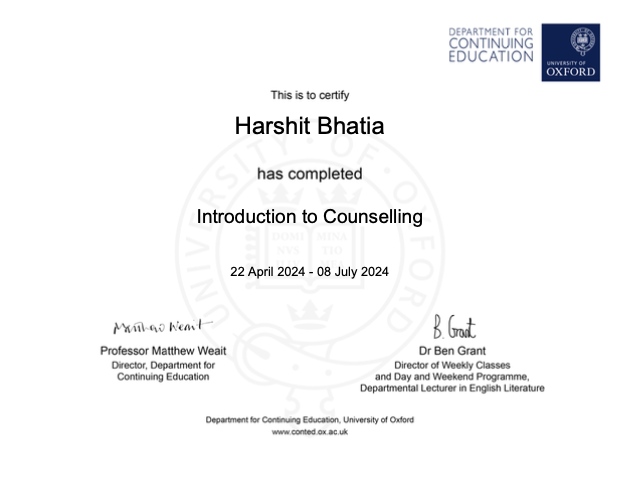
Trained in writing therapy first, then taught it to 500+ practitioners and clients across South and South East Asia, the UK and the Middle East.
Sound and story
The research behind the room
How sound alters memory, and how silence invites what words alone cannot. You get the applied version.
Questions people ask first
Do I need to be a strong writer myself?
No. The technique is structured, not literary. It works on people who have never journalled a day in their life, which is exactly who most of your clients are.
Can I attend if I am not a therapist?
Yes. Coaches, wellness practitioners, supervisors, educators and psychology students are all welcome, and so is anyone simply curious about the work. Use the "Which best describes you?" selector near the top of this page to see how the two days land for your situation.
What if I cannot attend both sessions live?
Both days are recorded and shared with every participant. The 30 minutes of live Q&A each day is where most of the real troubleshooting happens, so keep both slots free if you can.
Do I get a certificate?
Yes, you get a certificate of completion in this specific writing technique. It is not a clinical certification or a licence, and Day 2 covers exactly where the technique’s scope ends.
How much time does it take to start using this?
One client session. The technique is designed to be run inside a normal 50 minute hour without restructuring how you work.
Who is teaching this?
Harshit Bhatia. MSc in Creative Writing for Therapeutic Purposes from Middlesex University with the Metanoia Institute, Introduction to Counselling from the University of Oxford, and presenter at Lapidus International in London. He has guided 500+ practitioners and clients through this work directly.
What if it turns out not to fit my caseload?
You are covered by the Day 1 money-back guarantee. Attend Day 1 live, and if by that evening you feel it does not fit your caseload, email Harshit and the full fee is returned. No questions, no forms.
Day 1 money-back guarantee on every seat.
Frequently Asked Questions
Do I need to be a strong writer myself?
No. The technique is structured, not literary. It works on people who have never journalled a day in their life, which is exactly who most of your clients are.
Can I attend if I am not a therapist?
Yes. Coaches, wellness practitioners, supervisors, educators and psychology students are all welcome, and so is anyone simply curious about the work. Use the "Which best describes you?" selector near the top of this page to see how the two days land for your situation.
What if I cannot attend both sessions live?
Both days are recorded and shared with every participant. The 30 minutes of live Q&A each day is where most of the real troubleshooting happens, so keep both slots free if you can.
Do I get a certificate?
Yes, you get a certificate of completion in this specific writing technique. It is not a clinical certification or a licence, and Day 2 covers exactly where the technique’s scope ends.
How much time does it take to start using this?
One client session. The technique is designed to be run inside a normal 50 minute hour without restructuring how you work.
Who is teaching this?
Harshit Bhatia. MSc in Creative Writing for Therapeutic Purposes from Middlesex University with the Metanoia Institute, Introduction to Counselling from the University of Oxford, and presenter at Lapidus International in London. He has guided 500+ practitioners and clients through this work directly.
What if it turns out not to fit my caseload?
You are covered by the Day 1 money-back guarantee. Attend Day 1 live, and if by that evening you feel it does not fit your caseload, email Harshit and the full fee is returned. No questions, no forms.